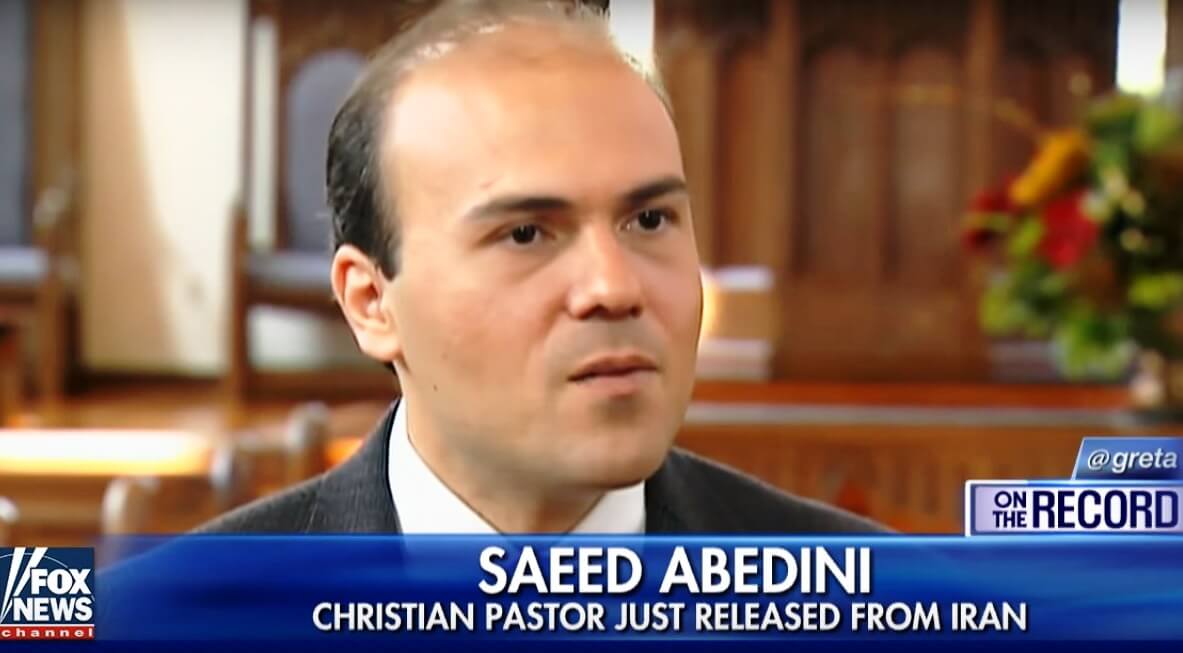
A screengrab from Pastor Saeed Abedini\'s interview with Greta of \"On the Record\" after his captivity in Iran. | YOUTUBE / Fox News
Pastor Saeed Abedini has recounted his experience while he was imprisoned in Iran for more than three years because of his Christian faith, and he has described how some of the Christian captives were forced to "embrace" Islam just to stop the horrific torture from continuing.
While Pastor Saeed Abedini witnessed some of the Christian prisoners in Iran verbally abandon their faith in exchange for escaping torture, there were also others who stood firm and refused to deny their faith. The pastor, who is an American citizen, said those who caved in were weakened by the difficulties they experienced in jail.
In a post on Facebook, Abedini detailed his time in prison where he witnessed some previously strong Christians verbally agree to turn to Islam to ease their pain.
"But unfortunately, I saw some of these heroes of the faith weaken through the difficulties and hardships of prison. I heard one of the Christians prayed Namaz Islamic prayer to make his situation easier," said Abedini in his post. "Some ended up in a divorce. I saw some political prisoners who started obeying the Intelligence Police of Iran to get free or make their situation easier in prison."
Abedini, who was thrown in jail in Iran for his Christian faith, was released along with three other American hostages in a prisoner swap in January. He has since been reunited with his family in Boise, Idaho.
In an interview with the Christian Broadcasting Network (CBN) a month after his release, he opened up about his horrific experience in the Iranian prison. He revealed that he used his time in captivity from 2012 to minister to his fellow prisoners.
In his first year in prison, Abedini was instrumental in the conversion of 10 prisoners to Christianity. When the intelligence police found out about it, they moved him to another prison. Nevertheless, he did not stop evangelizing even though they moved him several times.
Unfortunately, the prison authorities started torturing the people who embraced Christianity and isolated Abedini in his last two years there. However, he testifies that he relied on his faith to get him through the situation.
After his release three and a half years later, Pastor Saeed Abedini said he now sees America differently. He believes something is wrong with the country and God wants to revive America once again. He also asked for prayers for his marriage, which has had to endure some difficult times, but he is still hopeful that God will use his horrendous experiences for good things in the future.
Nearly two-thirds of churchgoers failed a test measuring their knowledge of the Bible, highlighting widespread gaps in biblical literacy, according to a report published Tuesday by Lifeway Research. The assessment used a traditional grading system ranging from A (90 and above) to F (below 60). The average score was 51, with 65% receiving an F, 9% a D, 9% a C, 8% a B and 9% an A.
Democratic Texas state Rep. James Talarico drew comparisons between himself and the biblical figures of David and Jesus in a victory speech Tuesday after defeating Republican Texas Attorney General Ken Paxton in the state's U.S. Senate election. “I'm reminded of that story from Scripture of a shepherd boy who goes up against a giant,” Talarico told supporters in Austin shortly before midnight.
WNBA player Sophie Cunningham, who drew national media attention this season for objecting to male trans-identified athletes in women's sports, reflected on her faith journey on an episode of Theo Von's podcast, saying she believes a revival is happening.
More than two-thirds of American teenagers say they would feel comfortable seeking guidance from Jesus about their identity, although parents and friends remain their preferred sources of advice, according to new research from Barna. Mothers emerged as the most trusted source of guidance, with 84% of teenagers expressing comfort in discussing identity-related questions with them.
A North Carolina county has argued that its legal battle with former Southern Baptist Convention President J.D. Greear’s The Summit Church over a proposed campus expansion centers on the limits of federal court authority rather than allegations of religious discrimination.